
Ia Teu le Vā: A Pacific Lens on Sacred Space, Boundaries and Staying Afloat
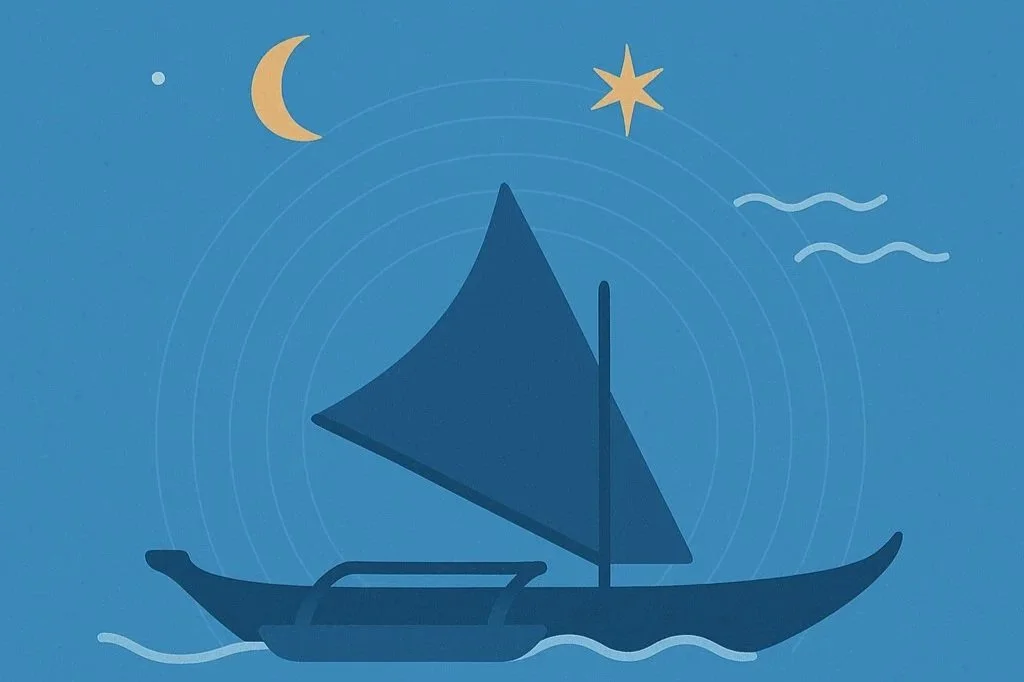
There’s a quote that often finds its way back to me:
“Ships don’t sink because of the water around them. Ships sink because of the water that gets into them.”
It’s a reminder that it’s not the world around us that pulls us under, but what we allow to enter our spirit. Yet through a Pacific lens — through the concept of vā, the sacred relational space that connects all things — this idea takes on deeper meaning.
In Samoan thought, vā is not emptiness; it’s the living space between — between people, between ideas, between the human and the divine. The phrase “Ia teu le vā” means “Cherish/Nurture the space between us.” It’s an invitation to tend the relationships that hold life in balance.
The water around the ship is like the vā around you — your community, your work, your environment. The water inside the ship is the vā within you — the inner space where your thoughts, emotions, and values meet. When the vā within becomes heavy with others’ expectations, unresolved conflict, or unprocessed pain, we begin to sink. Not because the ocean is rough, but because we’ve absorbed too much of it.
Yet vā doesn’t call us to isolation or self-protection. It calls us to relational awareness — to know when the water is rising and when to release it.
A ship isn’t built to escape the sea; it’s built to live with it. In the same way, we aren’t meant to avoid challenge or emotion, but to move through them with balance and clarity.
To tend vā is to listen — to yourself, to others, to the quiet space between. It’s to speak truth with care, to forgive, to clear what doesn’t belong, to restore peace where disconnection has settled. When your inner vā is steady, no storm can sink you.
Maybe the real lesson is this: The vā around you is the ocean that connects you; the vā within you is the hull that holds you. When you keep that inner space sacred, you stay afloat — not by avoiding the waves, but by learning to dance with them.
Ia teu le vā — cherish/nurture the space.
