
Meet The Team

Dr. Michael Ligaliga

A man giving a presentation in a classroom or conference room. He is wearing glasses, a dark polo shirt, khaki pants, and white sneakers with red accents. There is a large screen behind him displaying a slide titled 'NATIONAL SPACES' with bullet points. The room has white brick walls, large windows, and office equipment such as a copier and shelves with books and supplies.

Dr. Michael Ligaliga is a Pacific peacebuilder, educator, and researcher specializing in Alternative Dispute Resolution (ADR) and Indigenous peacebuilding frameworks. He holds a PhD in Peace and Conflict Studies and has designed and led programs across the Pacific, Asia, and the United States focusing on restorative justice, mediation, and intercultural communication.

Michael has served as an academic and practitioner in higher education and community-based projects, integrating -centered approaches into modern ADR systems. His published research and teaching emphasize Indigenous methodologies, dialogue, and reconciliation processes that restore balance and connection. He has also advised institutions on culturally grounded conflict systems and restorative education models.

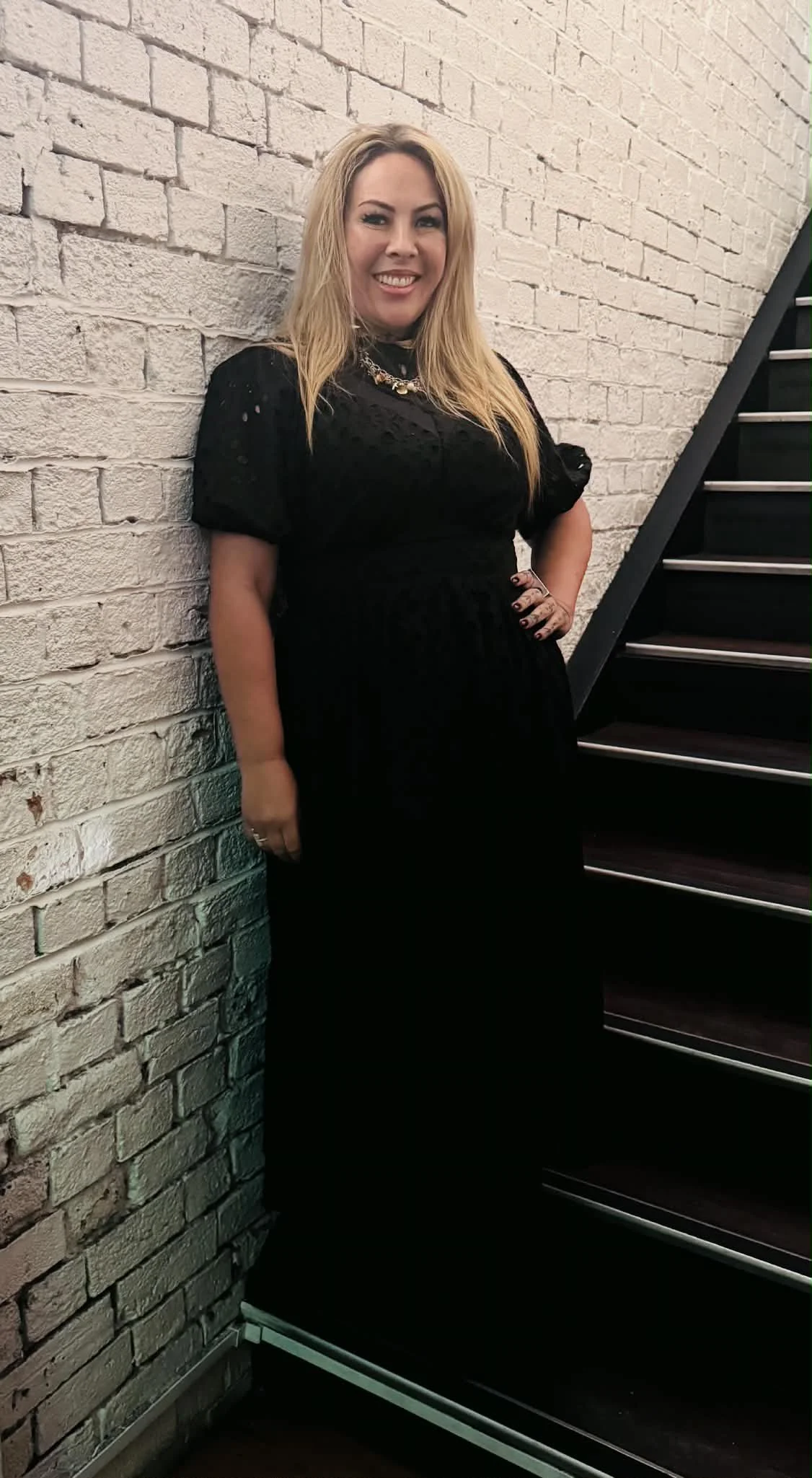
Helenā Kaho

A woman, Helenā Kaho, has blonde hair, wearing a black dress and a gold necklace, poses next to a brick wall and a staircase.

Helenā Kaho is a facilitator, lawyer, mediator, adjudicator, researcher, and community practitioner whose work bridges trauma-informed practice, cultural competency, and relational leadership. She designs and delivers training that weaves Pacific Indigenous knowledge with contemporary mediation and peacebuilding, supporting individuals and communities to navigate conflict with dignity, empathy, and care.

She holds a Bachelor of Arts, a Bachelor of Laws (Honours), and a Master of Laws (Honours) from the University of Auckland, where she previously lectured in law. Beginning her legal career in the Cook Islands, she now serves as a tribunal member, specialising in culturally responsive conflict resolution that honours both legal integrity and Pacific values of respect, connection, and care. Her academic and professional experience inform her work with HIVA, where she brings law, culture, and healing together through restorative practice..

A man standing in front of a stage with a large screen displaying the text 'Our Stories'. He is wearing glasses, a patterned shirt, and a black skirt with a watch on his left wrist. The stage behind him has traditional woven items, a blanket with geometric patterns, and a microphone. The background features dark curtains and a wood floor.

David Whippy

"Veinanumi (being considerate), Veivukei (helping others), and Vakarokoroko (respect) are Fijian tenets that rest on the central core relational ethic of Veilomani, to love one another. When we adhere to our cultural truths, we more easily avoid conflict.”

David’s area of emphasis is in the area of Peace Education, being heavily influenced by his own positionality and his diverse education foundation of Psychology (BS, BYU Hawaii) and Diplomacy and International Affairs (MA, University of the South Pacific). He will complete his PhD in Peace and Conflict Studies at the University of Otago in 2026. 

David comes with over 10 years of teaching peace and conflict at the university-level and facilitating workshops and trainings in grassroots communities. He has worked with non government and non profit organizations in Fiji, Hawaii, Israel and Puerto Rico in the areas of child protection and child rights advocacy, peace and conflict, ethnic and racial relations, and advocacy for survivors of sexual violence. 

A man with black hair and a beard smiling outdoors with a desert landscape and mountains in the background.

Ross Salanoa

Raised in Hawai‘i, Ross Salanoa is a product leader shaped by the many Pasifika cultures that surrounded him. These influences guide the way he builds products—with clarity, simplicity, and deep respect for how people actually experience technology. Ross has founded and led cultural projects such as Modern Tapa and Play Suipi, both created to celebrate and share Polynesian identity through design and storytelling. His personal journey in conflict, culture, and connection continues to influence his creative work, making HIVĀ a natural extension of that path.

For the last eight years, Ross served as Head of Product and Product Designer at Audience, guiding the evolution of industry-wide tools used across broadcast, radio, and digital media. His work blends product strategy, UX/UI craft, and hands-on collaboration with engineering teams. Having begun his career as a developer, Ross brings a rare balance of technical understanding and design intuition—allowing him to translate abstract ideas into real, high-impact products.

Ross earned his Bachelor of Science in Information Technology — Web Development from Utah Tech University. His education continues to inform his approach to systems thinking, architecture, and the intersection of design and engineering.

HIVA was born from years of shared work, reflection, and community engagement by co-founders Dr. Michael Ligaliga and Helenā Kaho. Both had spent decades working in education, law, and peacebuilding — often within systems that struggled to understand the cultural dimensions of conflict. Through their experiences in mediation rooms, classrooms, and village spaces across the Pacific, they saw a clear need for something different: a way of restoring relationships that honored both cultural wisdom and contemporary practice.

Their conversations often returned to the concept of — the relational space between people — and how its neglect led to disconnection and harm. Out of this shared vision, HIVA emerged as a space to restore and protect the through dialogue, empathy, and understanding.

This foundation became the heart of our vision — to restore peace by restoring relationship — and shaped our approach, which blends Indigenous knowledge and modern peacebuilding tools. From these beginnings, HIVA has grown into a movement dedicated to nurturing connection, healing, and transformation wherever conflict arises.

We began with a shared concern — that many systems of conflict resolution were missing the most important element: relationship. Too often, people were being processed through legal, educational, or workplace frameworks that focused on rules and outcomes, not on the human connections at the heart of every conflict. We saw communities carrying unspoken pain, schools struggling with disconnection, and workplaces where misunderstanding turned into mistrust.

In the Pacific, we are taught that peace is not the absence of conflict but the care of the — the relational space that binds us. When the is neglected, relationships fracture; when it is nurtured, people heal.

HIVA emerged as our response — a space designed to bring cultural intelligence, empathy, and relational practice back into conflict resolution. We created a framework that blends Indigenous values with modern mediation and restorative tools, enabling individuals and institutions to move from reaction to restoration.

Our solution is simple yet transformative: restore the , and you restore peace.

Let’s Work Together

Partner with us to navigate complex disputes with Pacific-informed processes that honour relationships, restore trust, and support lasting resolution.

Contact Us